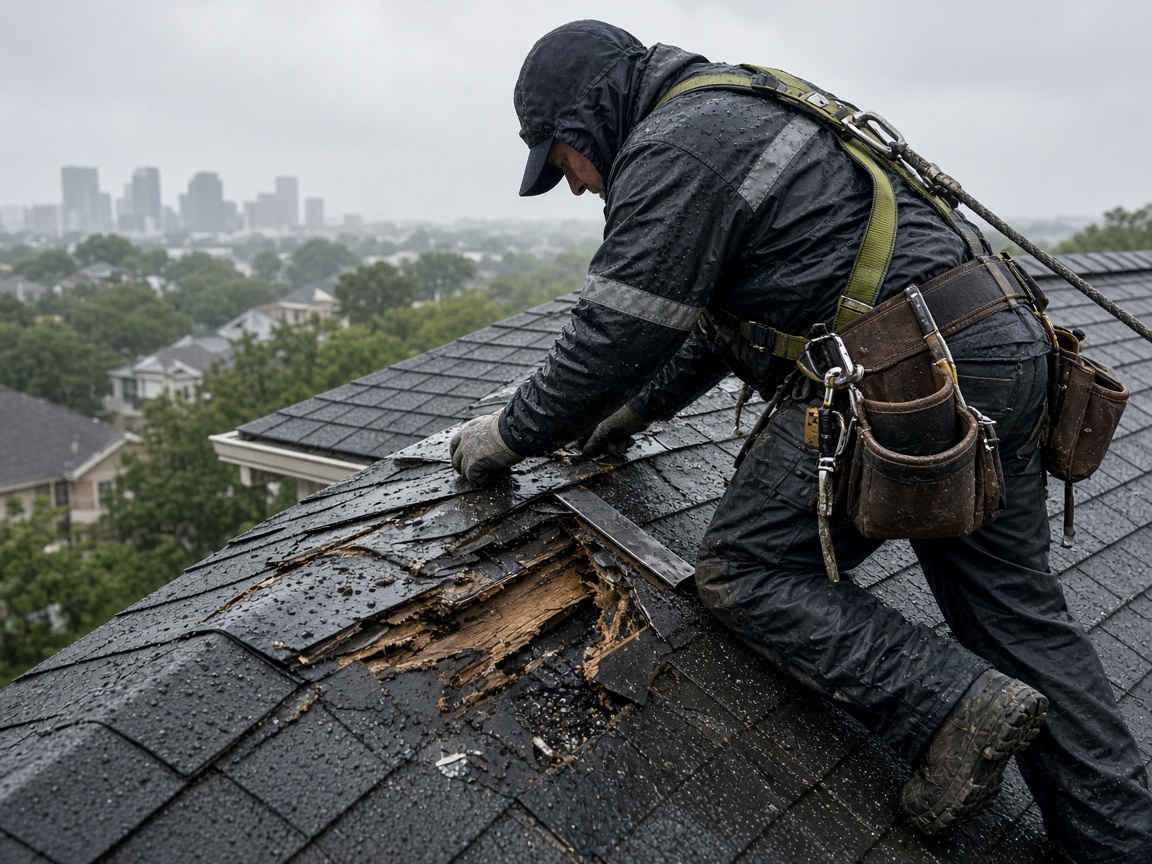
Houston's subtropical climate brings intense summer downpours and high humidity that quickly expose weaknesses in aging asphalt shingle and built-up roofs found throughout the Heights and Montrose. Older homes in these neighborhoods often have original decking that has absorbed repeated moisture cycles, allowing water to migrate along rafters before interior signs appear. Independent local providers familiar with Harris County housing stock know to check valleys, penetrations, and wall intersections first rather than assuming the visible drip point is the source.
Sudden wind-driven rain during mild winters can lift flashing around chimneys and skylights in Midtown and River Oaks homes where tree cover creates shaded, slower-drying areas. Providers assess both the roof surface and attic ventilation because trapped moisture under the decking leads to rot that spreads faster here than in drier climates. Temporary tarping is used only when active dripping threatens interiors, followed by permanent fixes that match existing materials to satisfy local building expectations.
Homeowners sometimes attempt sealant from big-box stores on active leaks, which traps water and accelerates deck damage in the humid environment. Proper emergency work requires removing wet insulation, drying the cavity, and addressing the entry point rather than surface coating. Providers working in Downtown and surrounding areas routinely document conditions for insurance claims when storms exceed normal rainfall patterns.
Technician insight
In Houston, the thing that catches most people out with Emergency Roof Repair is how fast humidity keeps wet decking from drying in the Heights and Montrose, turning a small flashing failure into full sheet replacement if not opened up right away.
Chimney Leak After Summer Storm in Montrose
Water appeared on a ceiling after several days of rain. Inspection showed lifted step flashing around an older brick chimney. The providers removed damaged shingles, replaced the flashing with proper overlap, and restored the roof section. No further intrusion occurred during later heavy rains.
How it works
- 1
Describe the Issue
Provide details about visible water intrusion, affected rooms, and recent weather to the independent local providers.
- 2
On-Site Assessment
A provider inspects the roof, attic, and interior to locate the actual entry point rather than the drip location.
- 3
Stabilize and Repair
Temporary measures stop active leaking, then permanent corrections restore the roof section using compatible materials.
- 4
Final Check
The area is tested with water and reviewed for any additional weak points created by Houston's frequent storms.